
Brake & Clutch Hydraulic Cylinders: The Power of Pressure You Can Rely On
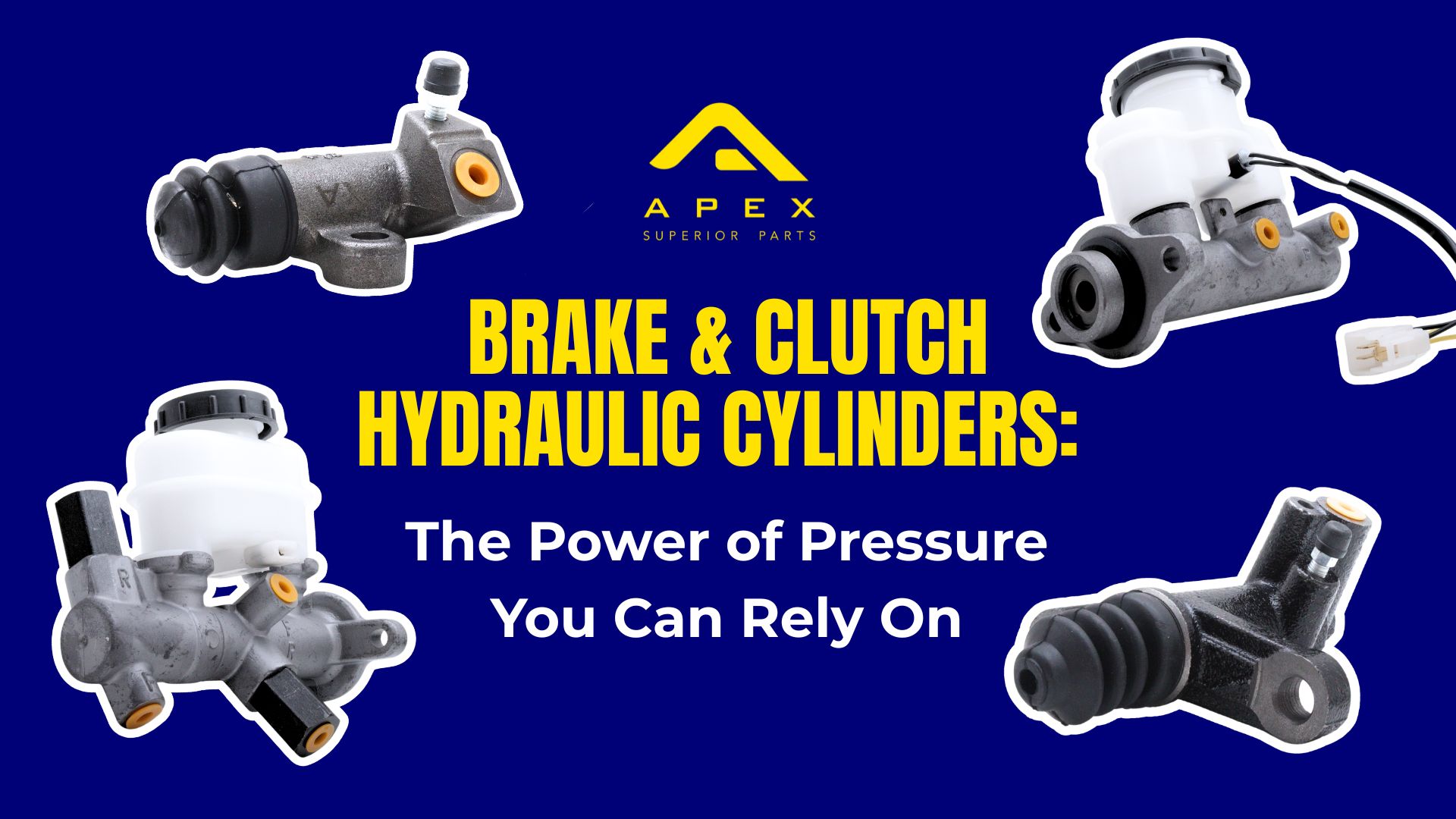
Most people never think about what happens after they press the brake or clutch pedal. They simply expect the vehicle or machine to respond instantly. And rightly so.
Behind that smooth response is a carefully engineered hydraulic system and at the centre of it are the brake and clutch hydraulic cylinders.
These components may be compact, but they play a critical role in safety, control and overall performance. Without properly built hydraulic cylinders, pressure cannot build correctly and without pressure, nothing moves as it should.
How Hydraulic Pressure Really Works
Hydraulic brake and clutch systems operate according to Pascal’s Law, a principle that explains how pressure behaves inside a closed system.
Put simply, when force is applied to a confined liquid, that force is transmitted evenly throughout the system. Liquids do not compress in the same way gases do. Instead, they transfer energy efficiently.
So when a driver presses a pedal:
- A piston moves inside the master cylinder
- Hydraulic fluid is displaced
- Pressure builds within the sealed system
- That pressure travels to another cylinder
- Mechanical movement takes place
It is a straightforward concept, but it requires precision engineering to function properly in real-world conditions.
Brake Hydraulic Cylinders: Turning Foot Pressure into Stopping Power
When the brake pedal is pressed, the brake master cylinder immediately converts that mechanical movement into hydraulic pressure.
The pressurised brake fluid moves through the brake lines towards the wheel cylinders or callipers. At the wheels, pistons are forced outward. Brake pads or shoes are pressed firmly against the rotating disc or drum, creating friction and slowing the vehicle.
This entire sequence happens almost instantly.
For braking systems, pressure consistency is everything. If pressure drops due to leakage, air contamination or worn seals, braking performance is compromised. That is why material quality, machining accuracy and proper sealing are so important.
Clutch Hydraulic Cylinders: Enabling Smooth Gear Changes
The clutch system works in much the same way, but instead of stopping motion, it allows controlled disconnection of engine power.
When the clutch pedal is depressed:
- The clutch master cylinder builds hydraulic pressure
- Fluid transfers that pressure to the slave cylinder
- The slave cylinder moves the clutch fork
- The clutch plate disengages from the flywheel
This allows gears to shift smoothly and prevents damage to the transmission.
Once the pedal is released, pressure drops and the system resets.
If the cylinder does not maintain proper pressure, drivers may experience difficulty changing gears, slipping clutches or inconsistent pedal feel.
Why Engineering Quality Makes the Difference
Hydraulic cylinders operate under constant stress. They face repeated pressure cycles, temperature fluctuations and exposure to brake fluid.
Over time, poorly manufactured components can lead to:
- Seal deterioration
- Internal scoring
- Fluid leaks
- Reduced responsiveness
- Early system failure
In braking systems especially, there is no tolerance for shortcuts.
High-quality brake and clutch cylinders are designed to maintain pressure integrity over long service periods. This means precision-machined bores, durable seals, corrosion-resistant materials and strict quality testing before the product ever reaches the customer.
Built for Demanding Applications
Across South Africa’s transport, agricultural, mining and construction sectors, hydraulic reliability is essential. Vehicles and machinery often operate in tough environments – heat, dust, heavy loads and long working hours.
In these conditions, a hydraulic cylinder must do more than simply function. It must perform consistently.
Well-designed brake and clutch cylinders ensure:
- Stable pressure transmission
- Immediate system response
- Extended service life
- Dependable performance under load
Brake and clutch hydraulic cylinders may not be visible once installed, but they are fundamental to safe and efficient operation.
Every time a pedal is pressed, these cylinders convert physical effort into controlled hydraulic force. It is a simple concept backed by precise engineering and when manufactured correctly, it delivers dependable performance day after day.
In systems where pressure equals control, quality is not optional. It is essential.