
Brake Hydraulic Cylinders: The Small Components Behind Stopping Power
When you press the brake pedal, you expect the vehicle to slow down smoothly and predictably. What you may not realise is just how much needs to happen between your foot pressing the pedal and the vehicle actually coming to a stop.
The braking system relies on a carefully controlled hydraulic circuit to transfer the force from the pedal to the brakes at the wheels. Hydraulic cylinders are a key part of that process, helping convert mechanical force into hydraulic pressure that can be used to apply the brakes.
What Are Brake Hydraulic Cylinders?
Brake hydraulic cylinders are components that use hydraulic pressure to operate parts of a vehicle’s braking system.
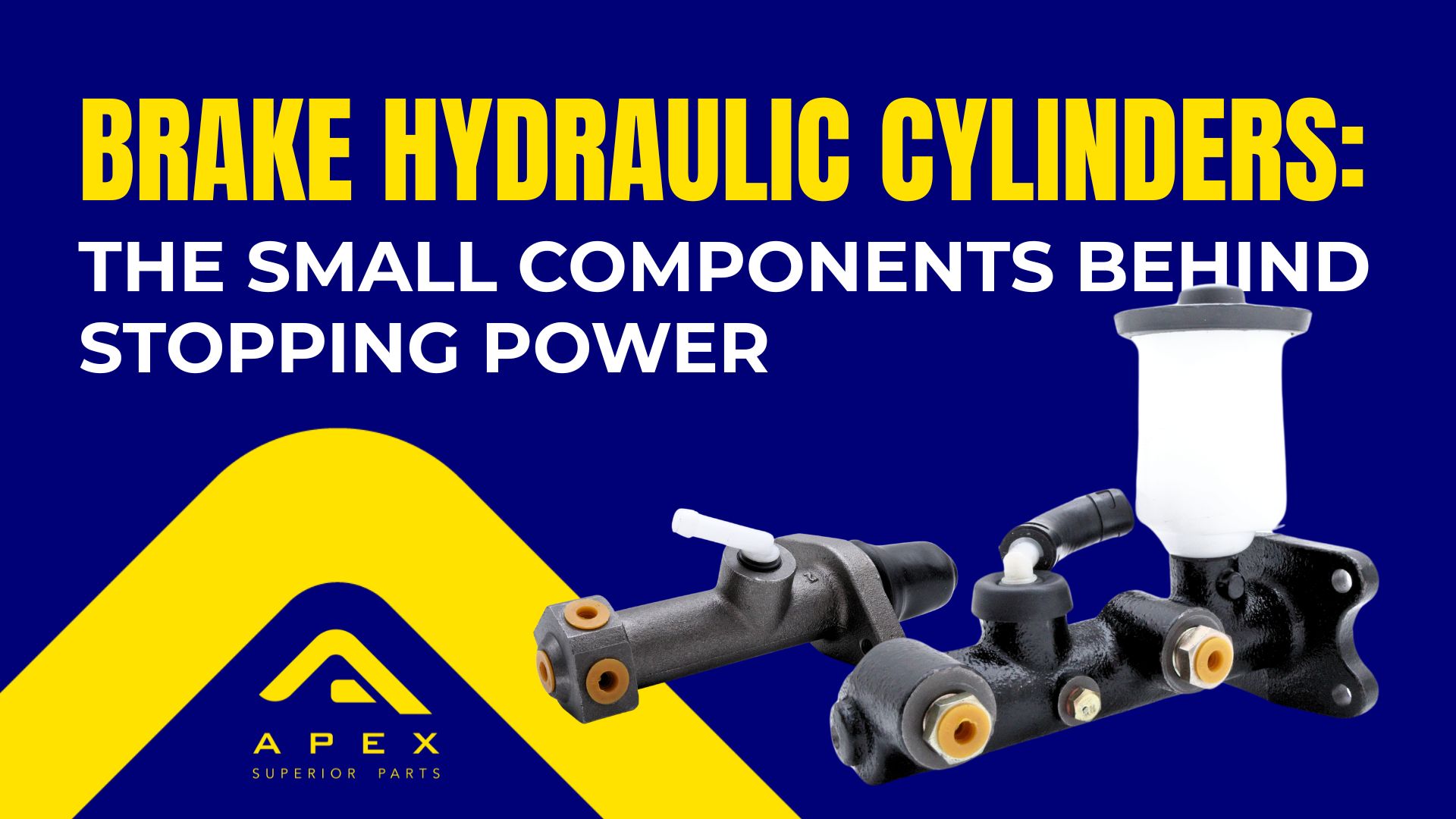
The master cylinder is one of the most important. When you press the brake pedal, the master cylinder converts that mechanical input into hydraulic pressure by pushing brake fluid through the braking system.
At the other end of the hydraulic circuit, depending on the vehicle’s brake design, components such as wheel cylinders or brake callipers use that hydraulic pressure to apply the brakes.
It is essentially a carefully controlled chain reaction, starting with your foot and ending with friction at the wheels.
How Does the Master Cylinder Work?
The master cylinder contains pistons that move when the brake pedal is pressed.
This movement pressurises the brake fluid inside the hydraulic circuit. The pressurised fluid then travels through brake pipes and hoses towards the braking components at the wheels.
The result is that relatively small movement at the pedal can generate enough hydraulic pressure to apply the brakes effectively.
Once you release the pedal, the system should allow pressure to return appropriately so the brakes can release.
What Are Wheel Cylinders?
Some vehicles, particularly those equipped with drum brakes, use wheel cylinders.
A wheel cylinder is positioned inside the brake drum and contains pistons. Hydraulic pressure pushes these pistons outwards, causing the brake shoes to move against the inside of the drum.
This creates the friction required to slow the wheel.
Disc-brake systems generally use callipers instead of wheel cylinders, but the underlying principle remains the same: hydraulic pressure is used to apply braking force.
Why Brake Fluid Matters
Hydraulic cylinders cannot do their job without brake fluid.
Brake fluid is specifically designed to transmit pressure through the braking system while operating under demanding temperature conditions.
Because brake fluid absorbs moisture over time, its condition can deteriorate. Contaminated or degraded fluid can affect braking system performance and may contribute to corrosion within hydraulic components.
Following the vehicle manufacturer’s recommended brake fluid service requirements is therefore an important part of brake maintenance.
Signs of a Hydraulic Cylinder Problem
Hydraulic problems can sometimes develop gradually.
Warning signs may include:
- A soft or spongy brake pedal
- A pedal that gradually sinks while pressure is maintained
- Brake fluid leaking around the master cylinder
- Uneven braking performance
- Reduced braking response
- Brake fluid levels that keep dropping
These symptoms can have several possible causes, so proper inspection is important before replacing components.
Why Leaks Should Never Be Ignored
A hydraulic braking system depends on maintaining the correct pressure.
A leak can allow brake fluid to escape and introduce air into the system. Since air can be compressed, unlike brake fluid, its presence can affect pedal feel and braking performance.
Visible brake fluid around a master cylinder, wheel cylinder, calliper or brake line should always be investigated promptly.
A small leak is not something to simply keep an eye on and hope disappears. Unfortunately, brake fluid is rather committed to its escape plan.
Brake Cylinders Can Wear Out
Like other mechanical components, hydraulic cylinders can deteriorate with age and use.
Internal seals can wear, pistons can become damaged and corrosion can develop within the cylinder. Contaminated brake fluid can also contribute to internal component wear.
A vehicle may continue operating despite early signs of hydraulic deterioration, which is why regular brake inspections are so important.
Proper Diagnosis Matters
A soft brake pedal does not automatically mean the master cylinder has failed.
Air in the hydraulic system, worn brake components, leaking hoses, damaged seals and other faults can produce similar symptoms.
Replacing the master cylinder without identifying the actual cause can therefore waste both time and money.
A proper inspection should consider the entire hydraulic system rather than focusing on one component immediately.
Why Quality Replacement Parts Matter
Brake hydraulic components operate under pressure and are directly involved in the vehicle’s braking system. Correct fitment, material quality and reliable sealing are therefore essential.
When replacing hydraulic cylinders or related brake components, choosing the correct part for the specific vehicle and application is essential for reliable performance.
What It All Means
Brake hydraulic cylinders may not receive as much attention as brake pads and discs, but they are a vital part of the braking system.
The master cylinder creates the hydraulic pressure that allows braking force to be transferred through the system, while wheel cylinders in drum-brake systems help apply the brake shoes at the wheels.
Keeping brake fluid in good condition, watching for leaks and paying attention to changes in brake pedal feel can help identify hydraulic problems early.
At Apex Superior Quality Parts, we believe that dependable braking starts with dependable components. Quality replacement parts, correct installation and regular maintenance all play a role in keeping a vehicle’s braking system working as it should.
When you press the brake pedal, you want the response to be predictable every single time. That’s why the small hydraulic components deserve a lot more attention than they usually get.